Pouring Concrete in 100-Degree Texas Heat: What Separates a Good Pour from a Bad One
Summer in North Texas speeds up everything concrete does, and not in a good way. Here is how a professional crew handles a hot-weather pour, from start time and subgrade prep to curing and control joints, and what to ask before yours.
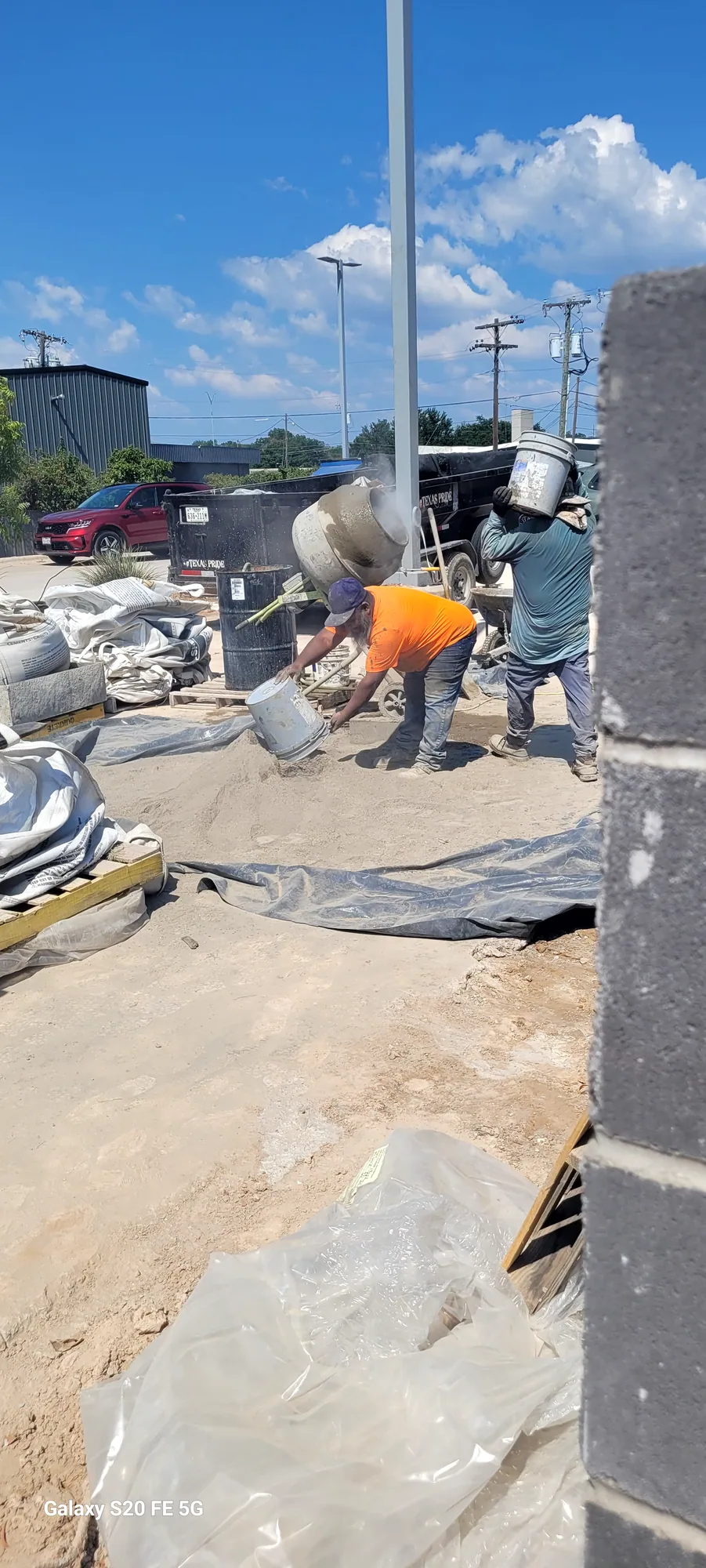
Short answer
Hot weather makes concrete set faster and lose water from the surface faster, which leads to weak surfaces, shrinkage cracks and joints cut too late. A good summer pour in North Texas starts early in the morning, uses a mix designed for heat, keeps the subgrade damp, has enough crew to place and finish quickly, starts curing immediately, and cuts control joints on time. Adding water at the truck to make it easier to work is the most common mistake.
Most concrete work in Dallas-Fort Worth does not stop for summer. Driveways, patios, sidewalks and commercial flatwork get poured through June, July and August, when afternoon highs regularly sit near or above 100 degrees. Concrete can be poured successfully in that heat. It just leaves a lot less room for error.
This article explains what heat does to fresh concrete, what a well-run summer pour looks like, and the questions to ask before a contractor pours yours.
What heat does to fresh concrete
Concrete hardens through a chemical reaction between cement and water called hydration. Heat speeds that reaction up. Wind, low humidity and direct sun pull water out of the surface. In a Texas summer, all of it happens at once:
- Faster setting. The concrete stiffens sooner, which shortens the time the crew has to place, consolidate and finish it.
- Rapid surface drying. Water evaporates from the surface faster than it can bleed up from below. That causes plastic shrinkage cracks, the short, random cracks that show up on the surface within hours of a pour.
- More water demand. Hot concrete loses workability quickly, which tempts crews to add water, and that weakens it.
- Lower long-term strength. Concrete that cures hot and dry can end up with lower strength and a dusty, weaker surface than the same mix cured under better conditions.
- A shorter window for saw cutting. Joints have to be cut sooner, before the slab cracks on its own.
What a good summer pour looks like
1. Start early
The best summer pours in North Texas start at or before sunrise. Concrete placed in the cool of the morning has time to be finished before the sun and wind pick up. A 2 p.m. pour in July is fighting the conditions from the first truck.
2. Plan the mix for heat
Ready-mix suppliers in DFW deal with heat every summer. Your contractor should order a mix suited to hot weather. That can include set-retarding admixtures to slow the set, water-reducing admixtures that improve workability without extra water, and, on large jobs, cooled water or ice at the plant to keep the concrete temperature down. Many specifications limit how hot the concrete can be when it arrives, often somewhere around 90 to 95 degrees.
3. Prepare the subgrade and forms
Dry, hot ground pulls water out of the bottom of the slab. Good crews dampen the compacted base right before the pour, without leaving puddles, and shade or wet the forms and steel if they have been sitting in the sun. The base itself matters as much in summer as any other time. We cover that in Why DFW Driveways Crack Early.
4. Keep the trucks and the crew moving
Concrete sitting in a drum in the sun keeps setting. Trucks should be scheduled so they do not wait long on site, and the crew should be big enough to place and finish quickly. A short-handed crew in the heat ends up rushing the finish or reaching for the water hose.
5. Do not add water to make it easier
This is the single most common mistake. Every gallon of water added at the truck beyond the mix design raises the water-to-cement ratio and lowers strength, and it increases shrinkage. If the concrete is too stiff, the fix is a water-reducing admixture or a better-planned mix, not the hose.
Red flag on pour day
If you see a crew spraying water onto the surface to help finish it, or adding a lot of water to the truck, ask about it. Sprinkling water during finishing weakens the top layer, which is the part that takes the wear and weather for the next thirty years.
6. Control evaporation while finishing
On hot, windy days, crews can use windbreaks, sunshades and evaporation retarders. An evaporation retarder is a spray-on film that slows moisture loss from the surface between finishing steps. It is not a curing compound, but it buys time and helps prevent plastic shrinkage cracks.
7. Start curing immediately
Curing keeps moisture in the concrete so it can gain strength. In summer, curing has to start as soon as the finishing is done. Common methods include:
- Liquid curing compound sprayed evenly over the entire surface right after finishing
- Wet curing with soaker hoses, sprinklers or wet burlap kept damp
- Curing blankets or plastic sheeting to hold moisture in
The first several days matter most. Keep heavy vehicles off a new driveway until the contractor tells you it is ready, which is commonly around a week for cars and longer for heavy trucks.
8. Cut control joints on time
Heat shortens the window for saw cutting. Joints need to go in as soon as the concrete can be cut cleanly without the edges raveling, which in summer can be just a few hours after finishing. A joint cut the next morning may be too late, because the slab has already cracked where it wanted to. Joints should be about a quarter of the slab depth and laid out in roughly square panels.
What to ask your contractor before a summer pour
- What time will the pour start?
- What mix and PSI are you ordering, and does it include admixtures for heat?
- Will you add water on site? (The right answer is: only within the mix design.)
- How many people will be on the crew for this size of pour?
- How will you cure it, and for how long?
- When will you saw the control joints?
- When can I walk on it, and when can I drive on it?
What you can do after the pour
- If the contractor asks you to keep the slab damp, follow the schedule, especially in the afternoons.
- Keep sprinklers from soaking the base along the edges of the new slab for long periods.
- Stay off it with vehicles until the contractor clears it.
- Do not use deicers or harsh chemicals on new concrete in its first winter.
Signs of a bad summer pour
- Lots of short, random surface cracks appearing the first day (plastic shrinkage)
- A dusty surface that powders when you sweep it
- Flaking or scaling of the top layer
- Cracks running across panels instead of in the joints
- Uneven color from inconsistent curing
If you are not sure whether cracks on your slab are cosmetic or structural, our guide When to Repair vs. Replace Concrete walks through the difference.
Texas Structural Concepts pours driveways, patios, walkways and commercial flatwork year-round across Dallas, Fort Worth, Plano, Frisco, McKinney, Prosper, Allen, Garland, Wylie, Mesquite and Arlington, with schedules and mixes planned around the Texas heat. Learn more about our concrete services or get a free estimate.
Frequently asked questions
Is it OK to pour concrete in the summer in Texas?
Yes, as long as the pour is planned for the heat. Early start times, a mix designed for hot weather, a damp base, a properly sized crew, immediate curing and on-time saw cutting let a summer pour perform as well as one poured in milder weather.
What is the best time of day to pour concrete in the summer?
Early morning, ideally starting at or before sunrise. That gives the crew time to place and finish before the afternoon heat, sun and wind speed up setting and surface drying.
Why does new concrete get small surface cracks the first day?
Those are usually plastic shrinkage cracks. They form when water evaporates from the surface faster than it rises from below, which is common on hot, windy days. Evaporation control and prompt curing help prevent them.
How long should new concrete be kept moist?
The first several days are the most important, and many contractors cure for about a week. Follow your contractor’s instructions for your specific mix and conditions.
Free on-site evaluation
Seeing this at your property?
Compacted base, the right mix, real steel and joints cut on time. That is how a North Texas driveway lasts thirty years or more. We serve residential and commercial properties across Dallas-Fort Worth and work alongside insurance carriers when a claim is involved.
Keep learning: Concrete Services · When to Repair vs. Replace Concrete
 Concrete Services
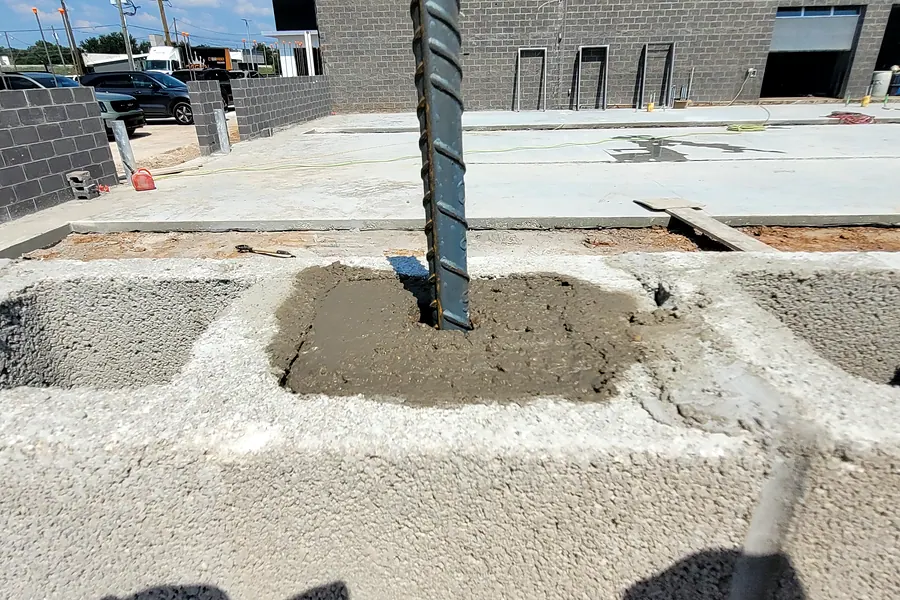
Why DFW Driveways Crack Early: PSI, Rebar and Base Prep
A North Texas driveway should last thirty years or more. Many crack within a few. Here is how concrete strength, rebar versus wire mesh, base compaction on clay and control joints decide which one you get.
7 min readRead article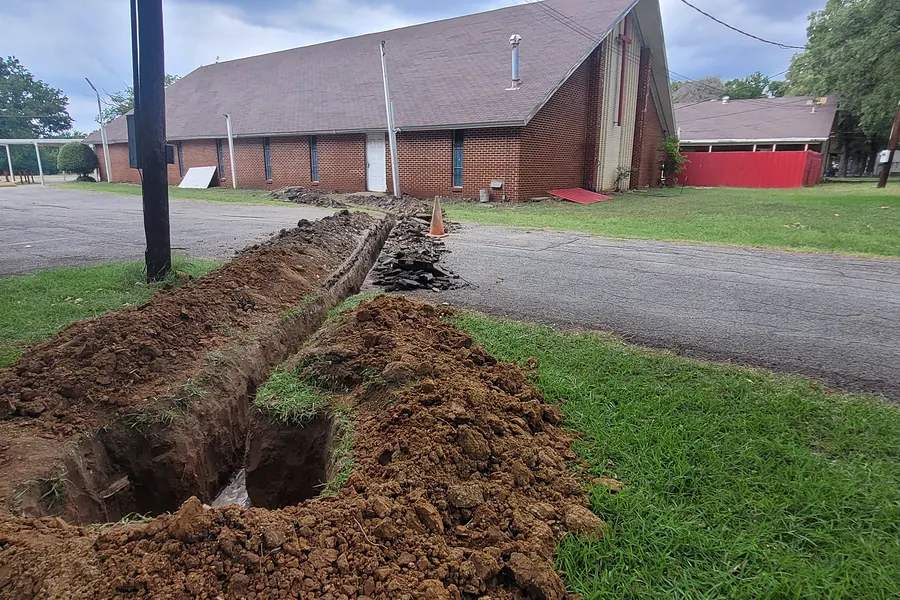 Drainage & Water Management
Standing Water Near Your Slab? How Poor Drainage Feeds Foundation Problems
Water that pools against the foundation soaks the clay on one side of the house and not the other. Here is how grading, gutters, French drains and surface drains keep water moving away, and how drainage protects a foundation repair.
6 min readRead article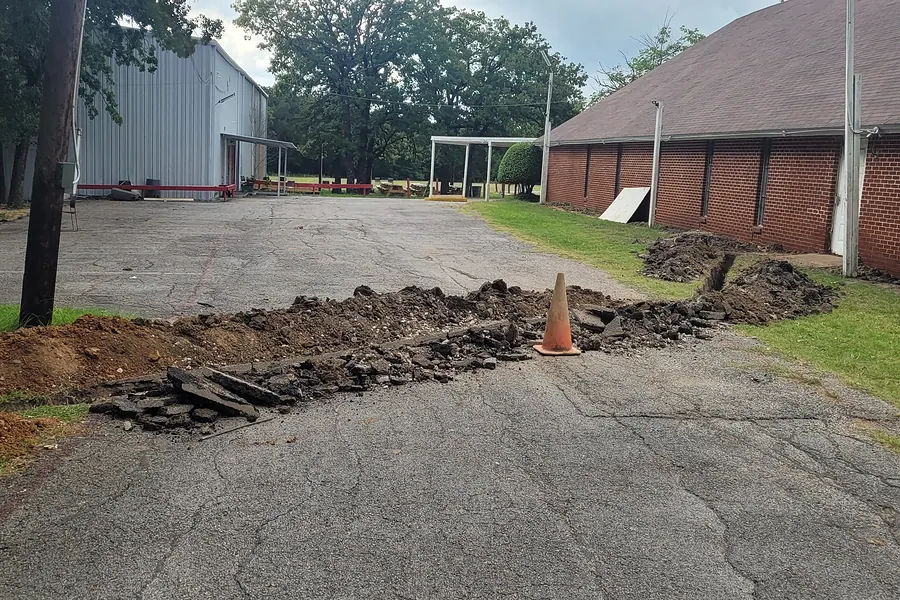 Drainage & Water Management
New Build, Bad Drainage: Yard Problems in Fast-Growing DFW Suburbs
The building boom in Celina, Prosper, Forney, Princeton and similar suburbs has put thousands of new homes on tight lots and fresh backfill. Here is why the grading often fails in the first few years, and what to check before your builder warranty runs out.
6 min readRead article