Frozen Pipes in DFW: Lessons From Winter Storm Uri
In February 2021, Winter Storm Uri froze pipes across North Texas, many of them running through attics. Here is how to prepare for the next hard freeze, what to do in the first 24 to 48 hours after a burst, and how drying and documentation should work.
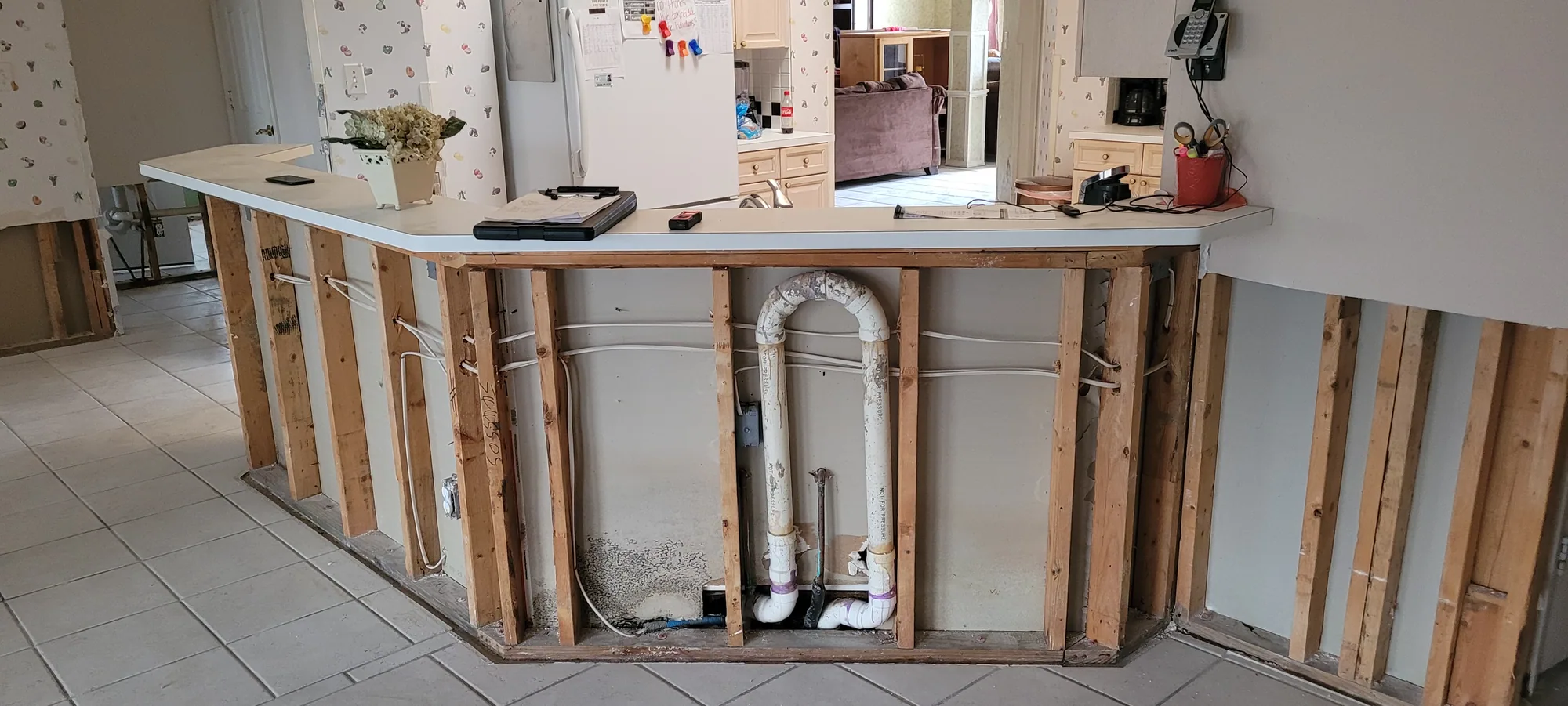
Short answer
Many DFW homes run water lines through attics and exterior walls that were never built for a hard freeze. Before a freeze: insulate exposed pipes, protect outdoor faucets, drip vulnerable lines and know where your main shutoff is. If a pipe bursts: shut off the water, stay safe around electricity, photograph everything, get standing water out, and start professional drying within the first 24 to 48 hours. Keep moisture readings and records for your insurance claim.
In February 2021, Winter Storm Uri pushed North Texas into days of below-freezing temperatures. DFW Airport dropped below zero, and much of the state lost power at the same time. When the thaw came, plumbers and water restoration crews across the Metroplex were buried in calls. Ceilings came down in Plano, McKinney, Garland and Fort Worth. Pipes burst in attics, exterior walls and garages in homes that had never had a freeze problem before.
Uri was extreme, but hard freezes are not rare here. This article covers why DFW homes are vulnerable, how to prepare, and what to do in the first two days if a pipe bursts anyway.
Why North Texas homes are so exposed to freezes
- Water lines in the attic. Many DFW homes are built on slabs, and it is common for supply lines to run up through the walls and across the attic. The attic is insulated from the house below, not from the cold outside, so those pipes sit in air close to the outdoor temperature.
- Pipes in exterior walls. Kitchen sinks and bathrooms on outside walls often have supply lines in the wall cavity against the cold side.
- Uninsulated garages and outdoor faucets. Water heaters, laundry connections and hose bibs in garages and on exterior walls freeze easily.
- Construction built for heat. Homes here are designed around cooling. Freeze protection is often minimal because hard freezes do not happen every year.
- Power outages. Uri showed that losing power during a freeze takes away the heat that normally keeps interior pipes safe.
How to prepare before a hard freeze
- Find your main water shutoff now. It is often in a box near the street or at the meter, sometimes in the garage. Make sure it turns, and keep the tool you need to turn it with nearby.
- Insulate exposed pipes in the attic, garage and crawl space with foam pipe insulation. Pay attention to lines near eaves, vents and gable ends.
- Protect outdoor faucets. Disconnect hoses and cover hose bibs with insulated covers.
- Drip vulnerable faucets. A slow drip from faucets on exterior walls keeps water moving and relieves pressure.
- Open cabinet doors under sinks on outside walls so warm air reaches the pipes.
- Keep the heat on. If you leave town, keep the thermostat at a safe setting, many people use about 55 degrees, rather than turning it off.
- Know how to drain the system if you lose power for an extended freeze. Shutting off the main and opening faucets can prevent a burst.
- Save your plumber’s number and a water restoration contact before the storm, not after.
The thaw is when you find out
A frozen pipe often cracks while it is frozen but does not leak until the ice melts. Check the attic, garage and ceilings as temperatures rise, and be ready to shut off the main. Many Uri-related floods started on the first warm afternoon.
The first 24 to 48 hours after a burst pipe
What happens in the first two days decides how much of the house has to be torn out. Water keeps moving through drywall, insulation and framing, and mold can begin to grow in damp materials within about a day or two.
Hour one
- Shut off the main water.
- Stay safe around electricity. Do not walk through standing water near outlets or appliances. Turn off power to affected areas at the breaker if you can do so safely. If a ceiling is sagging with water, stay out from under it.
- Call a plumber to repair the break.
Hours one to six
- Photograph and video everything before cleanup: the break, the water, ceilings, walls, belongings and the water line on walls.
- Get standing water out with towels, mops or a wet vacuum.
- Move belongings out of wet areas and onto dry surfaces.
- Report the claim to your insurance carrier.
Hours six to forty-eight
- Start professional drying. Fans alone are not enough for water inside walls and ceilings.
- Take moisture readings to map how far the water traveled. It is almost always farther than it looks.
- Remove materials that cannot be dried, like saturated insulation and badly damaged sheetrock, and cut open walls where water is trapped.
How drying and moisture readings work
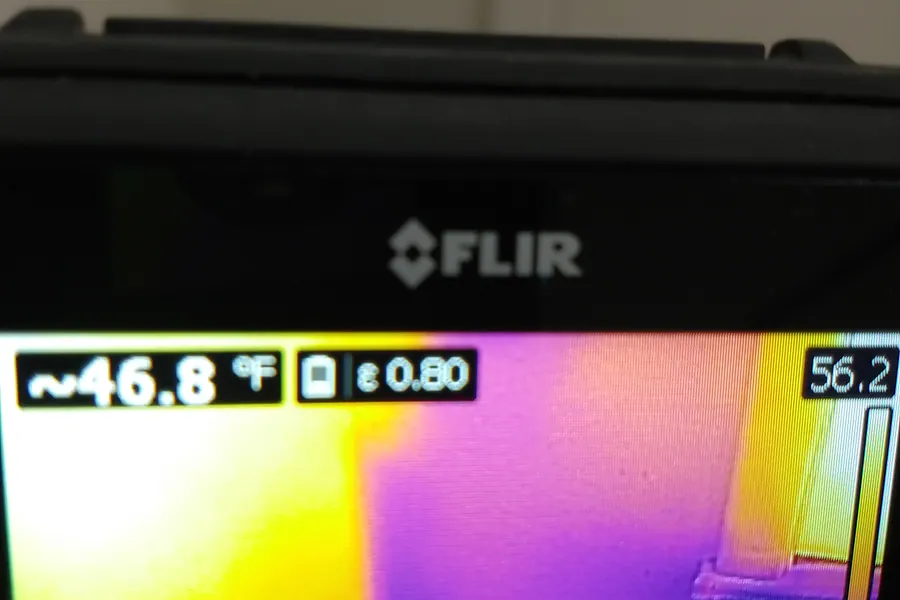
Professional drying is a measured process, not a guess. We use moisture meters and, where useful, thermal imaging to find wet materials behind surfaces. Readings are taken on affected walls, ceilings and framing and compared to dry reference readings from unaffected areas of the house.
Then the structure is dried with air movers and dehumidifiers placed for the specific layout, with readings retaken daily. Drying is finished when materials return to dry standard, not when they look dry. Closing up a wall that is still wet inside is how mold problems start months later. Our guide The Water Damage Mitigation Process walks through each stage.
Documentation for your insurance claim
Burst-pipe claims go smoother with a clear paper trail. Keep:
- Photos and video from before any cleanup
- The plumber’s invoice describing the break and the cause
- Daily moisture readings and a drying log
- A record of materials removed and why
- Receipts for emergency costs
- A written scope for the rebuild
We document moisture readings and drying in a form you can hand to your carrier, and we work alongside adjusters on both residential and commercial claims. Coverage depends on your policy, so read it or ask your agent what applies.
The rebuild
Once the structure is dry, the damaged areas get put back. Our water restoration rebuild covers sheetrock, texture and paint, matched to the rest of the room so the repair disappears. If a ceiling came down or walls were opened, this is where the house starts to look like home again. See our paint and sheetrock work for more on texture matching.
After the next freeze warning
If your home had pipes freeze during Uri or a later cold snap, ask your plumber whether any attic or exterior-wall lines can be rerouted or better insulated. It is much cheaper than another ceiling.
Texas Structural Concepts provides water damage assessment, structural drying and rebuild for homes and commercial buildings across Dallas, Fort Worth, Plano, Frisco, McKinney, Allen, Richardson, Garland, Carrollton, Lewisville and the rest of DFW. Learn more about our water restoration service or call (469) 333-0335.
Frequently asked questions
What temperature do pipes freeze in Texas homes?
Pipes in unheated spaces such as attics, garages and exterior walls are at risk when outdoor temperatures fall into the low 20s or below, especially for several hours or with wind. Exposed pipes can freeze sooner.
How fast does mold grow after a pipe bursts?
Mold can begin growing on damp building materials within roughly 24 to 48 hours. That is why drying should start as soon as possible and be confirmed with moisture readings rather than by how things look.
Should I turn off my water when leaving town in winter?
If a hard freeze is expected while you are away, shutting off the main and keeping the heat at a safe setting greatly reduces the risk of a flood. Ask your plumber how to drain lines if you expect an extended freeze.
Does insurance cover burst pipe water damage?
Many homeowners policies cover sudden water damage from a burst pipe, but terms, exclusions and deductibles vary. Report the loss promptly and keep photos, moisture readings and invoices to support the claim.
Free on-site evaluation
Seeing this at your property?
We document the moisture, dry the structure to verified readings, and rebuild the sheetrock, texture and paint, with records your carrier can use. We serve residential and commercial properties across Dallas-Fort Worth and work alongside insurance carriers when a claim is involved.
Keep learning: Water Restoration · The Water Damage Mitigation Process
 Water Restoration
Slab Leaks: When Your Foundation and Your Plumbing Fail Together
On North Texas clay, the foundation can stress the plumbing under the slab, and a leak under the slab can move the foundation. Here are the signs of a slab leak, how to check your meter, and how the repair, drying and rebuild should happen.
6 min readRead article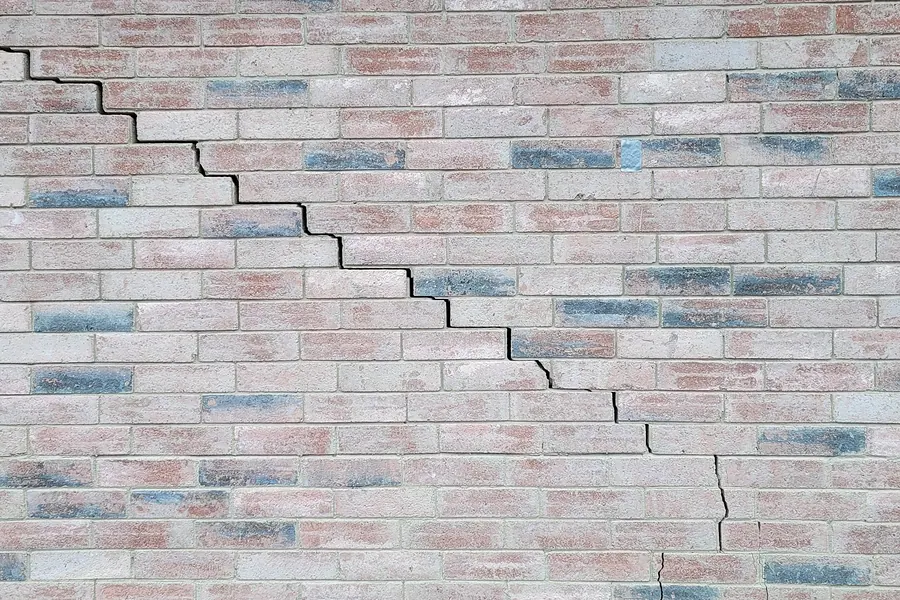 Foundation Repair
Why DFW Homes Crack: The Clay Soil Under Your Slab
The Blackland Prairie clay under Dallas-Fort Worth swells after wet springs and shrinks through dry summers. Here is how that cycle moves your slab, the signs to watch for, and how piers stop it.
8 min readRead article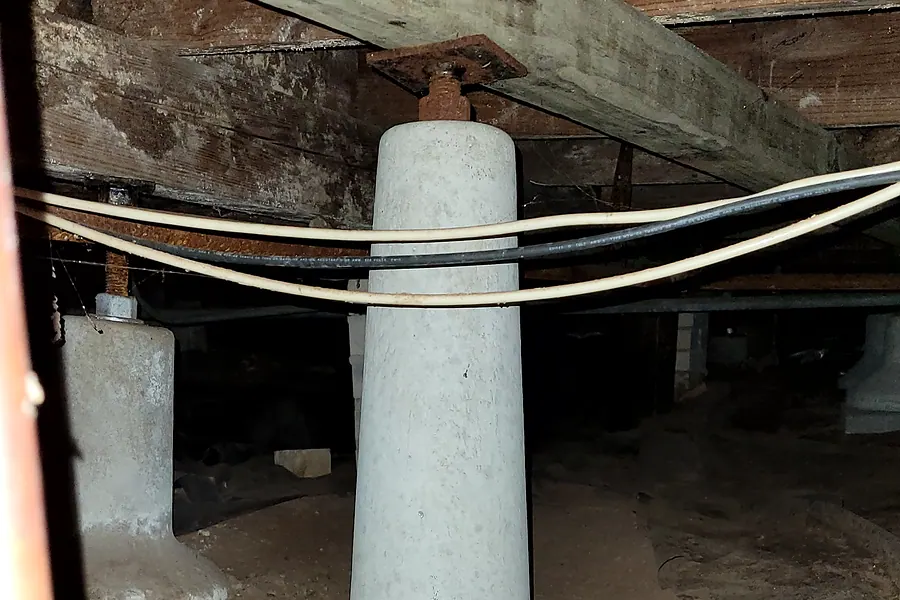 Foundation Repair
Pier-and-Beam Problems in Older DFW Neighborhoods
Older crawl-space homes in East Dallas, Oak Cliff, Fort Worth and historic downtown Garland, McKinney and Wylie have their own set of problems. Sagging floors, rotted sills and crawl-space moisture, and when shims are enough.
7 min readRead article